
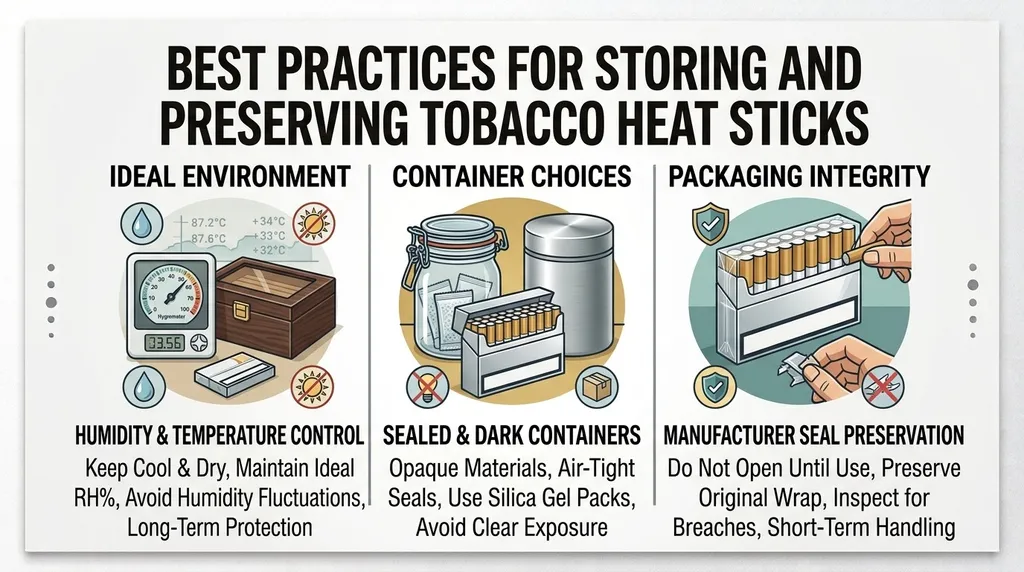
If you've ever pulled a heat stick out of your bag after a long day and noticed it just didn't taste the same, you're not imagining things. Heat sticks are more sensitive than people realize. Moisture, heat, and even the wrong storage box can quietly change how a stick performs, long before you notice anything is wrong. The good news? A few small habits can keep every stick tasting the way it's supposed to, from the first draw to the last.
This guide walks through the practical, real-world side of storing tobacco heat sticks: what damages them, what protects them, and how to keep their original taste intact even in tough climates.
Why Storage Actually Matters
Heat sticks are made from processed tobacco that's designed to be heated, not burned. That distinction matters. Because they're heated rather than combusted, the tobacco inside reacts much more visibly to changes in humidity and temperature than traditional cigarettes do.
Think of a heat stick almost like a delicate spice or a fine tea leaf. Left in the wrong conditions, it absorbs moisture from the air, dries out under heat, or picks up odors from nearby items. None of these changes are dramatic on their own, but together they chip away at the smoothness and flavor clarity that made you choose that stick in the first place.
Moisture: The Silent Flavor Killer
Moisture is probably the biggest threat to a heat stick's quality, and it's also the easiest to overlook. Tobacco is naturally absorbent, so it pulls in ambient humidity from the air around it, especially in coastal or tropical regions where humidity levels swing throughout the day.
Here's what happens when a stick absorbs too much moisture:
- The draw becomes harder, and the vapor production drops
- The tobacco flavor turns muted or slightly sour
- The stick may not heat evenly, leading to an inconsistent experience
On the flip side, sticks that are exposed to overly dry conditions for too long can lose some of their natural richness, making the flavor feel thin or flat.
Simple fix: Keep your heat sticks in their original sealed packaging until you're ready to use them. Once opened, store the remaining sticks in an airtight container, ideally with a small silica gel packet tucked inside to absorb excess humidity.
Temperature Control: Why It's More Important Than You Think
Temperature swings are just as damaging as moisture, but they work differently. Heat sticks are engineered to perform within a specific internal moisture and oil balance. When they're left in a hot car, a sunny windowsill, or a warm pocket for extended periods, that balance shifts.
High heat can cause the tobacco to dry out unevenly, degrade some of the aromatic compounds responsible for flavor, and even affect the paper wrapping. This is a particularly real concern in regions with intense heat for much of the year. If you live in or are visiting somewhere with consistently high temperatures, the way you store and transport your sticks needs to reflect that environment. This is exactly the kind of climate challenge that shoppers looking forTerea Dubai products need to think about, since summer temperatures there can easily exceed what a pack of heat sticks is designed to tolerate for long, unprotected periods.
Simple fix: Store your sticks somewhere cool and stable, ideally between 15°C and 25°C. Avoid glove compartments, direct sunlight, and any spot near a heat source like a stove, radiator, or laptop vent. If you're traveling in extreme heat, a small insulated pouch or a soft-sided cooler bag can make a real difference.
How Poor Storage Changes the Taste You Expect
One of the most frustrating parts of improper storage is that it doesn't just make a stick "worse" in a general sense. It actually shifts the specific flavor profile you were expecting. A menthol stick that's absorbed too much humidity might taste dull instead of crisp. A rich tobacco blend left in the heat might come across as harsh or slightly burnt-tasting, even when heated correctly.
This is worth keeping in mind if you enjoy trying different varieties, since each flavor profile reacts a little differently to environmental stress. Fruity or menthol blends tend to lose their brightness first, while deeper tobacco blends are more likely to develop a flat or muted taste. If you want to understand how varied the available options really are, it helps to look at the full range ofterea sticks flavors so you know what the "correct" taste is supposed to be for each one, and can spot the difference immediately if storage conditions have thrown it off.
Everyday Storage Habits That Actually Work
You don't need anything elaborate to protect your heat sticks. A few consistent habits go a long way.
Keep the original pack sealed as long as possible. The packaging is designed with moisture resistance in mind, so don't break the seal until you're ready to start using a pack regularly.
Use an airtight secondary container. Once a pack is open, transfer unused sticks into a small airtight case, especially if you're carrying them around during the day.
Avoid the fridge. This one surprises people, but refrigeration introduces condensation risk every time you take the container in and out, which can actually increase moisture exposure rather than reduce it.
Store upright, not crushed. Sticks that get bent or compressed in tight pockets or bags can develop uneven airflow inside the tobacco chamber, which affects how they heat.
Rotate your stock. If you buy in bulk, use older packs first. Even under ideal conditions, tobacco products have a shelf life, and flavor quality gradually declines over time.
Mind your travel bag. If you're heading somewhere hot, don't leave sticks in a car or direct sun for hours. A short walk in your pocket is fine; sitting in a parked car at midday is not.
A Quick Environmental Checklist
Before storing your sticks long-term, run through this short mental checklist:
- Is the storage spot away from direct sunlight?
- Is the temperature relatively stable, not fluctuating between hot and cold?
- Is humidity controlled, ideally with a moisture-absorbing packet nearby?
- Is the container airtight and not overly crowded?
- Are older packs being used before newer ones?
If you can answer yes to all five, your sticks are in good hands.
Final Thoughts
Storing heat sticks properly isn't complicated, but it does require a little intention. Moisture and temperature are the two biggest variables working against flavor quality, and both are entirely within your control once you know what to watch for. A cool, dry, stable environment paired with airtight storage will keep your sticks performing the way they're meant to, draw after draw.
The next time you unwrap a fresh pack, take a moment to think about where it's been sitting and where it's headed next. That small bit of awareness is really all it takes to protect the taste you're paying for.